 ONLINE SHOP · SINCE 2012
 41 items
 11 items

From the laundry to preparing food — everyday measures that can help you protect your family
 Can you catch the virus that causes COVID-19 from food? How should I do the laundry now? Ordinary household chores are becoming a source of uncertainty and anxiety as families try to provide the essentials while keeping their loved ones healthy and safe. Widespread misinformation about the virus puts everyone at risk and adds the strain of having to separate fact from fiction.
Although the virus that causes COVID-19 is still being studied, we already know that it is passed on through direct contact with an infected person via respiratory droplets (when coughing and sneezing) and by touching surfaces contaminated with the virus. On surfaces, the virus can survive from a few hours to several days. The good news? Ordinary disinfectants kill it. What does this mean for your home?
To help parents, we have gathered the latest information from the experts on what is known about COVID-19, along with advice on how to keep it out of your home.
Cleaning and hygiene tips to protect against COVID-19
Personal hygiene
Simple hygiene measures can help you protect the health of your family and of everyone around you.
- Don’t touch your face
- Avoid touching your eyes, nose and mouth.
- Don’t cover your mouth with your hands when coughing or sneezing
- Cover your mouth and nose with the crook of your elbow or with a tissue when you cough or sneeze. Dispose of the tissue immediately.
- Keep your distance
- Stay at least 1 metre away from anyone who is coughing or sneezing.
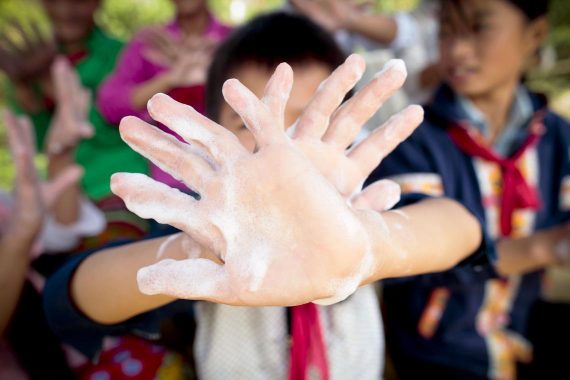
- Wash, wash and wash your hands again. Yes, you really are hearing it everywhere, because it is the best form of protection. Wash your hands frequently with soap and water for at least 20-30 seconds. An easy way to time it with your children is to sing the birthday song twice.
- Don’t forget to wash your hands after blowing your nose, sneezing into a tissue or using the toilet, when you leave and return home, before preparing food and before eating, and before applying make-up, putting in contact lenses and so on.
- If you use hand sanitiser, make sure it contains at least 60% alcohol, apply it to all surfaces of your hands and rub them together for 20-30 seconds until they feel dry. If your hands are visibly dirty, always wash them with soap and water.
Did you know … ? Cold and warm water are equally effective at killing germs and viruses — as long as you use soap and wash your hands properly!
Cleaning the home
Cleaning and disinfecting frequently touched surfaces in your home is an important precaution for reducing the risk of infection.
Follow the instructions for safe and effective use of cleaning products, including the precautions to be taken when using the product, such as wearing gloves and ensuring good ventilation.
Some national authorities have drawn up lists of recommended products to use against the virus that causes COVID-19.
Frequently touched surfaces that should be cleaned and disinfected
These differ from home to home, but the most common ones are: door handles, tables, chairs, handrails, kitchen and bathroom surfaces, taps, toilets, light switches, mobile phones, computers, tablets, keyboards, remote controls, games controllers and favourite toys.
What to use for cleaning and disinfecting
If a surface is dirty, first clean it with soap or detergent and water. Then use a disinfectant containing alcohol (around 70%) or bleach. Vinegar and other natural products are not recommended.
In many places, disinfectant sprays and disinfecting wipes are hard to find. In that case, keep cleaning with soap and water. For some surfaces, a diluted household bleach solution can be used.
How to disinfect
It is important not to wipe cleaning solutions off immediately after applying them to a surface. To ensure they work, most disinfecting products such as wipes and sprays need the surface to stay wet for several minutes. Always read the instructions to make sure you are using the product as recommended and to avoid damaging delicate items such as mobile phones and other electronic devices. Consider using cases that can be cleaned.
Cleaning clothes
It is currently unclear how long the virus that causes COVID-19 can survive on fabrics, but many items of clothing have plastic and metal parts on which it can remain active for anything from a few hours to several days.
Be careful and use common sense. Good practice includes taking off your shoes when you come into the house and changing into clean clothes when you return from busy places, as well as washing your hands with soap and water immediately afterwards.
Doing the laundry at home
Wash bedding, towels and clothes regularly.
- Don’t shake dirty laundry, to minimise the chance of spreading the virus through the air.
- Wash with soap or detergent using the highest suitable water temperature, and dry the laundry completely — both steps help to kill the virus.
- Wash your hands with soap and water or use an alcohol-based hand sanitiser immediately afterwards.
- Wash or disinfect the laundry bag or basket as well. Consider collecting laundry in disposable bags.
Doing the laundry away from home
If you have to use a launderette outside your home, take suitable precautions:
- get your laundry ready before you leave, so that you spend as little time as possible away from home;
- try to go to the launderette when there are fewer people;
- keep a physical distance from other people;
- wear disposable gloves if you have any, disinfect the surfaces of all washing machines you use, and avoid touching your face;
- if you can, wait outside the launderette until the wash cycle has finished;
- fold your laundry at home;
- wash your hands with soap and water or use an alcohol-based hand sanitiser immediately afterwards;
- wash or disinfect your laundry bag or basket. Consider collecting your laundry in disposable bags.
If you do not have access to a launderette, wash your clothes at home with soap or detergent and the hottest water possible.
Preparing food
Although there is currently no evidence that people have become infected with the COVID-19 virus from food or food products, it is possible for people to become infected when they touch surfaces or objects that the virus has landed on and then touch their face.
A greater risk arises from close contact with other people while shopping or receiving a food delivery (as well as when receiving any deliveries in areas where the virus is circulating). As always, good hygiene is important when handling food in order to prevent all foodborne illnesses.
Precautions when handling food and food packaging
- Remove all unnecessary packaging and dispose of it in a bin with a lid.
- Take food out of the containers it was delivered in, put it on clean plates and throw the containers away.
- You can wipe down durable packaging such as tins with disinfectant before opening them or putting them away for storage.
- Wash unpackaged produce such as fruit and vegetables thoroughly under running water.
- Wash your hands with soap and water or use an alcohol-based hand sanitiser immediately afterwards.
General food hygiene advice
- Always wash your hands thoroughly with soap and water for at least 20 seconds before preparing food.
- Use separate chopping boards for preparing raw meat and fish.
- Cook food to the recommended temperature.
- Where possible, keep perishable products in the fridge or freezer and check their use-by dates.
- Make sure you dispose of (including separating) food waste and packaging in an appropriate and hygienic manner, avoiding a build-up of waste that could attract pests.
- Wash your hands with soap and water for at least 20 seconds before eating, and make sure your children do the same.
- Always use clean utensils and plates.
https://www.unicef.org/bulgaria/
